Hiring a Gutter Contractor in Florida: Questions Homeowners in Leesburg Should Ask
Anyone who owns a home in Leesburg learns pretty quickly that gutters are not a decorative trim detail. They are part of how the house handles Florida weather, and Florida weather does not play around. Summer rains can hit hard and fast. Tropical systems bring wind, debris, and long stretches of soaking conditions. Humidity keeps organic buildup damp for longer than many homeowners expect. When gutters clog or drain poorly, the problem tends to show up all at once.
That is why hiring a gutter contractor Florida homeowners can trust is less about finding the lowest number on a quote and more about asking the right questions before the work starts. A good contractor should be comfortable discussing drainage, debris loads, fastening methods, maintenance, and how the system will perform during the parts of the year that really test it.
In the Leesburg area, and across nearby communities like Lady Lake, Wildwood, Fruitland Park, Ocala, Newberry, and Gainesville, the details matter. The right questions can tell you whether a contractor is thinking like an installer or like a problem solver.
Start with the weather your house actually gets
A gutter system in Florida has to do more than move water on a calm day. It has to keep up when runoff builds fast, when leaves and pine needles collect in valleys and corners, and when storm prep gets serious. University guidance in Florida consistently stresses clearing leaves, needles, and debris from roofs, gutters, and storm drains, especially during storm preparation. That point alone should shape the conversation you have with any contractor.
So the first useful question is simple: How are you planning this system for heavy rain and debris, not just for normal days?
You want to hear more than, “We install gutters all the time.” A thoughtful answer usually sounds more specific. The contractor should talk about how water moves off your roof, where downspouts will discharge, and how debris from surrounding trees may affect maintenance. If you have live oaks, pines, or both, that matters. Florida homeowners know what those trees can drop. Oak leaves, acorns, and pine needles do not behave the same way in a gutter. Needles mat together. Leaves hold moisture. Acorns can collect in downspout openings and corners. A contractor who works in this region should already be thinking about that.
Ask how they determine the right gutter and downspout size
This is where many homeowners get vague answers, and vague answers are not good enough. Florida’s building requirements say gutters and downspouts must be sized and discharged in accordance with the Florida Building Code and Plumbing provisions. That does not mean every house gets the same setup.
If you have been searching phrases like gutter sizes for Florida homes, that instinct is a good one. Size matters, but it cannot be reduced to a one-size-fits-all rule. A contractor should explain how they decide what is appropriate for your roof and drainage pattern. You do not need a lecture in hydrology, but you do need confidence that the recommendation is based on your house and not just on what happens to be on the truck that day.
A useful follow-up question is: What tells you this house needs this size, this number of downspouts, and these discharge points?
Notice the three parts there. Size alone is not the whole story. A larger gutter will still struggle if downspouts are poorly placed or if discharge ends up concentrating water where it creates another problem. In practical terms, homeowners in places like Newberry often ask about downspout drainage Newberry FL because they have learned that where the water ends up matters nearly as much as how it gets off the roof.
A contractor with good field judgment should be able to walk the perimeter with you and point out likely choke points, splash areas, and sections of roofline that take the brunt of runoff.
Ask what material they recommend and why
Florida code language is helpful here because it narrows the conversation. Gutters and leaders on exterior buildings should be metal or approved plastic and should be securely fastened with corrosion-resistant fasteners. That gives you a clear opening for a practical question: What material are you recommending for this house, and how will it hold up in our climate?
A lot of homeowners looking into aluminum gutters Central Florida options are doing so for understandable reasons. Metal systems are common, and in a humid climate, fastening and corrosion resistance deserve real attention. The contractor should be willing to discuss not just the gutter material itself, but also the fasteners and attachment approach. A decent-looking installation can still become a maintenance headache if the fastening hardware is not appropriate for the environment.
This is one of those places where experience shows up in the little details. A contractor who thinks beyond installation day will talk about secure attachment, weather seamless gutters for Florida homes exposure, and how the system may need to be maintained over time. They should not treat the hangers, screws, or other fastening components as an afterthought.
Ask why they are recommending a particular profile
Many homeowners have heard terms like K-style without knowing whether that is a design choice, a capacity choice, or both. If your online searches have turned up K-style gutters Lady Lake FL, ask directly: Why this profile for my house?
You are not fishing for a sales pitch. You are checking whether the contractor can explain the fit between the roofline, expected water flow, and maintenance needs. A reliable answer should connect the gutter style to actual performance and installation considerations, not just curb appeal. Profile discussions should never replace conversations about sizing, fastening, and discharge, but they do matter when the installer is trying to build a complete system.
Sometimes homeowners get distracted by what the front elevation will look like from the driveway. That is understandable. Still, the better contractor will pull the conversation back to function. In Florida, pretty gutters that overflow in summer are not much of an upgrade.
Ask where the downspouts will discharge
This question gets skipped far too often, and it should be near the top of the list. Florida guidance around stormwater repeatedly emphasizes keeping leaf litter and yard debris out of gutters and storm drains because runoff can carry that material into waterways. That tells you two things at once. First, gutters need regular cleaning. Second, discharge points should be planned with a little care.
Ask: Where will each downspout send water, and how do you avoid creating washout or concentrating debris?
A contractor may not be a landscape designer, and that is fine. You are not asking them to redesign the whole yard. You are asking whether they have thought through the path of runoff after it leaves the downspout. On some houses, one side takes far more roof water than the others. On others, a patio, walkway, or narrow side yard can make discharge tricky. If the answer sounds careless, that is a warning sign.
This matters even more if your yard already struggles with leaves. UF/IFAS guidance notes that live oak leaves and acorns can contribute to stormwater nutrient pollution when runoff carries them away. The same basic concern applies at home scale. A good gutter system should move water efficiently without turning every storm into a debris transport event across the property.
Ask how they handle pine needles, oak leaves, and seasonal buildup
This is one of the most Florida-specific questions you can ask, and it separates local practical knowledge from generic sales language. Try this: What kind of maintenance should I expect here, based on the trees around the house?
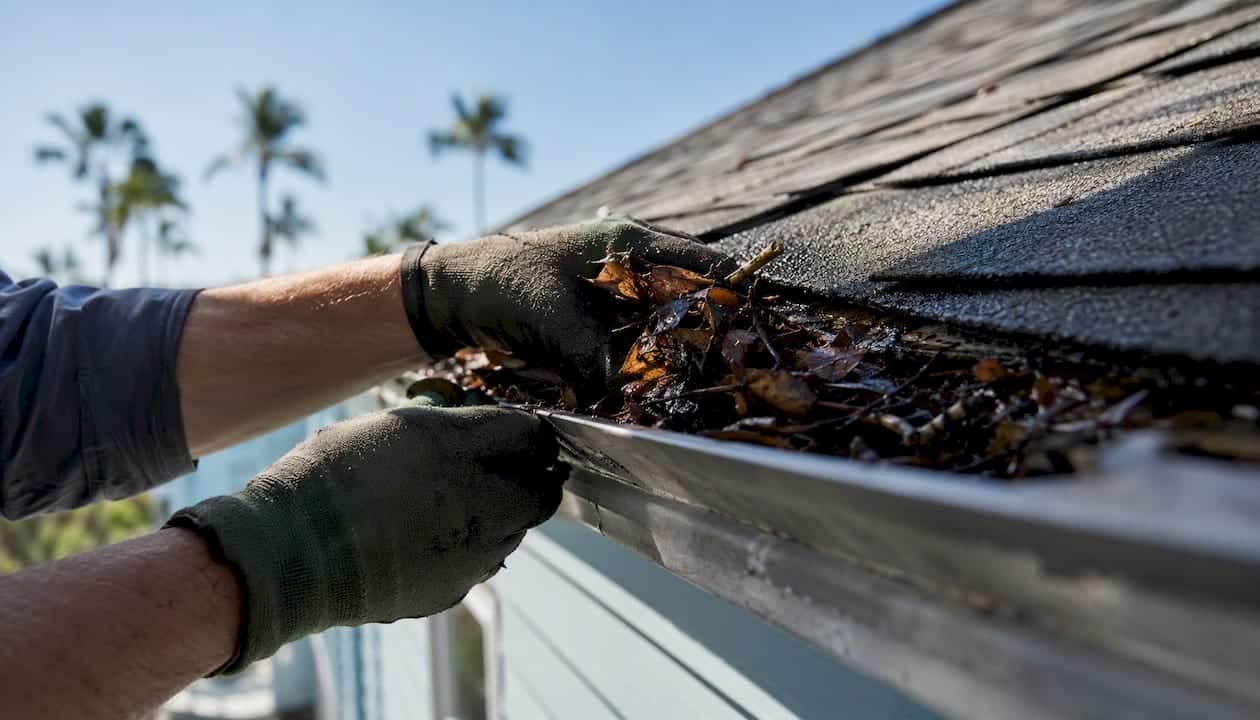
A contractor who works across Central Florida should immediately understand why you are asking. Pine needles and oak leaves are common here. They do not fall in the same way, and they do not clog systems in the same way. Needles can weave themselves into screens and corners. Oak debris can build up as a damp mat and hold moisture. Summer accelerates organic buildup, and maintenance guidance in Florida specifically advises cleaning gutters and downspouts as needed and removing organic accumulation, especially in that season.
This is also the right moment to ask about gutter guards for pine needles Florida homeowners often consider. The important word there is “ask,” not “assume.” Guard products can reduce some cleaning frequency in some settings, but a contractor should be honest about trade-offs. The useful answer is not “You will never clean again.” The useful answer is a realistic discussion of what kind of debris your house gets and how any guard choice may affect maintenance access, clog points, and cleaning habits.
A contractor who overpromises on guards is often telling on themselves. In this climate, nothing eliminates maintenance altogether.
Ask how the system will be prepared for storm season
A lot of homeowners think of storm readiness in terms of shutters, generators, and tree trimming. Gutters often fall lower on the list until they overflow during a major rain. That is why it is worth asking: What makes this a storm ready gutter system for Florida conditions?
You are not looking for marketing language like storm ready gutters Florida if that phrase is not backed by practical details. You want to hear how the system will be fastened, how debris management affects performance, and what upkeep is needed before heavy weather arrives. Florida storm prep guidance specifically calls for clearing roofs, gutters, and drains of leaves, needles, and other debris. Any contractor worth considering should reinforce that point, not treat cleaning as optional.
The best conversations here are straightforward. A contractor might tell you that even a well-installed system will fail to perform if it is packed with debris during peak rain season. That kind of answer shows maturity. Good installation and good maintenance are partners, not substitutes.
Ask what kind of maintenance they expect after installation
This question is useful because it reveals whether the contractor is selling a product or thinking about long-term ownership. Ask: After this is installed, what should I plan to do each year?
The answer should account for your roofline and tree cover. It should also reflect Florida’s maintenance reality, where gutters and downspouts often need cleaning as organic material accumulates, especially in summer. If the house has a lot of nearby tree canopy, a realistic contractor should say so.
Here is a short checklist of the kind of answer you should hope to hear:
- Gutters need to be checked and cleaned as debris builds up, not just when they visibly overflow.
- Downspouts should stay clear, because a clogged downspout can make an otherwise sound gutter act undersized.
- Storm season prep should include clearing leaves, pine needles, and roof debris before heavy rains arrive.
- Organic buildup should not be left to sit through humid stretches, because wet debris packs down and slows drainage.
- Yard debris should be managed so it does not wash into storm drains or across the property during runoff.
If a contractor brushes all of that aside, they may be trying to make the sale easier in the moment. That usually costs the homeowner later.
Ask how they approach repair versus replacement
Not every problem calls for a full new system. Sometimes what you need is targeted correction. Other times, patching the same trouble spots every year is throwing good money after bad. This is where your question should be direct: What can be repaired, and what would make replacement the smarter choice?
Homeowners searching gutter repair Wildwood FL or gutter replacement Gainesville FL are often already at this crossroads. The contractor should be willing to explain their reasoning in plain language. If they jump straight to replacement without discussing the existing condition, be cautious. If they insist everything can be repaired without explaining limitations, be equally cautious.
There is a middle ground that experienced contractors usually understand well. A single section may be salvageable while another has chronic drainage problems because of layout or discharge. A corner that repeatedly traps oak debris may need a different solution than a straight run that only needs secure refastening and cleaning. Judgment matters here, and so does honesty.
Ask about seamless installation, but keep the focus on performance
The phrase seamless gutters Ocala FL shows up often because homeowners like the idea of fewer joints and a cleaner look. That can be part of the conversation, but do not let the word “seamless” do all the work. Ask: How does your installation method affect drainage, fastening, and future maintenance?
That question keeps the discussion anchored to function. A contractor should be able to explain the practical benefits of their approach without pretending it erases the need for cleaning or storm prep. In Florida, any gutter system still has to deal with debris, heavy runoff, and humid conditions.
This is true whether the home is in Ocala, Leesburg, or anywhere across the region. The branding term matters less than the installation quality and the thought put into sizing, discharge, and upkeep.
Ask what they expect to happen during a heavy summer rain
This is one of my favorite homeowner questions because it forces the contractor to picture real conditions instead of ideal ones. Ask: When we get one of those hard summer downpours, what do you expect this system to do?
Listen carefully to the answer. Strong answers usually describe behavior, not slogans. The contractor might talk about getting water off the roof quickly, directing it efficiently through downspouts, and reducing the chance of overflow caused by poor placement or debris buildup. They should also be candid that no system performs well when neglected.
That candor is useful. Florida weather can overwhelm clogged gutters fast. Anyone who has watched a gutter act like a waterfall after a few weeks of leaf and needle buildup knows this firsthand. A contractor who says that maintenance still matters is usually giving you the truth.
Ask whether the contractor notices site-specific details
A reliable gutter contractor should be observant. During an estimate, they should notice obvious tree cover, roof valleys, debris patterns, and places where runoff may gather. You can test that without turning the conversation into a quiz.
Ask something like: What concerns you most about this house’s drainage setup?
This is a revealing question because it has no canned answer. On one house, the main issue may be pine needles collecting on a shaded side. On another, it may be a downspout location that sends water and debris toward a walk or storm drain path. On another, it may simply be that the current setup is not being maintained often enough for the amount of nearby canopy.
If the contractor cannot identify anything specific, that is not reassuring. Every house has something worth noticing.
Ask who will own the cleanup and debris conversation
This may sound minor, but it matters in Florida. Since leaves, acorns, and pine needles can move into stormwater during runoff, the homeowner should know what happens to debris removed during cleaning or repair. Ask: When debris comes out of the gutters, what do you recommend doing with it?
You are not looking for a complicated waste plan. You are checking whether the contractor understands that debris should be managed responsibly and kept from washing back into drains and waterways. Florida guidance encourages using fallen leaves and pine needles on site as mulch rather than letting them wash away. That is practical advice, and it fits how many homeowners already manage yard debris.
A contractor who thinks beyond the ladder usually gives better guidance overall.
The answers that usually signal a solid hire
By the time you finish these conversations, you are not just comparing bids. You are comparing judgment. A strong contractor usually does a few things consistently. They connect recommendations to your actual roof and yard. They discuss code-related basics like sizing, discharge, materials, and corrosion-resistant fastening without getting slippery. They do not pretend maintenance disappears. They treat storm prep as part of ownership, not as an upsell.
Here are five signs you are hearing grounded, experience-based advice:
- They explain sizing and downspout placement as a system, not as separate parts.
- They discuss debris loads from pines and oaks in practical terms.
- They are honest about the limits of gutter guards and the need for periodic cleaning.
- They mention secure fastening and appropriate materials without being prompted repeatedly.
- They talk about discharge and runoff behavior, not just the appearance of the finished gutters.
That is the kind of conversation homeowners deserve, whether they are comparing gutter cleaning Fruitland Park FL services, exploring gutter replacement Gainesville FL, or trying to decide if a simple repair will get them through another season.
What a good estimate should leave you with
By the end of the estimate, you should feel that the contractor has helped you understand your house a little better. Not sold harder, understood better. You should know how they are thinking about water volume, debris, discharge, maintenance, and fastening. You should know whether they have considered the realities of Central and North Florida weather. You should also know what they expect from you as the homeowner after installation.
That last part is important. Even the best gutter system in Leesburg still lives under Florida skies. Needles fall. Oak leaves pack down. Summer buildup happens. Storm prep matters. Cleaning matters. The right contractor will not hide that. They will build around it.
And that is really the heart of the hiring decision. You are not just choosing someone to hang metal or approved plastic along a roof edge. You are choosing someone whose recommendations will shape how your home handles some of the most routine, and most punishing, weather conditions in Florida. A contractor who welcomes detailed questions is usually the one worth taking seriously.